Saturday, October 12, 2019

Extra Credit Reading Notes: Russia Folktales, Part A

(Pot of Gold that the old man found. Source)


  • A poor old man's wife dies. He asks people to help bury her but no one wants to help. Not even the pope
  • He tells the pope he'll pay him back with interest but pope still doesn't want to help
    • What if the pope accepted the offer?
  • Old man goes to dig the grave by himself
  • While digging the grave he finds a pot full of gold
    • What if the pope put the pot there on purpose?
  • Used the money to hire people to help dig the grave and bury his wife
  • After the funeral, pope gets curious on how the old man suddenly had money. Old man told him and that made the pope devise a plan with his wife to get the gold from the old man
  • The pope killed and skinned a goat, wearing the goat's skin as a mask. Then the pope went to the old man's house, acted like the Devil, and told the old man he planted the gold there and was only supposed to take a little to help pay for the funeral
  • When the pope got home with the money, he tried to remove the goat skin but it was fused with his body as punishment from God
Possible plot twist:
What if the pope is good and accepted the offer, old man got his wife buried, pope puts pot of gold near old man to find on purpose, old man finds it, pope asks old man if he has the money yet, old man lies and says no, then karma comes back on the old man

Note: Add some dialogue


Bibliography
The Treasure by W.R.S. Ralston

Thursday, October 10, 2019

Week 8 Progress

(My reflecting pose. Source)

Looking Back
I'm proud that I dug in and started putting work in the class. Early in the semester I fell behind and missed about two full weeks worth of assignments. It was a combination of being distracted with personal issues, prioritizing assignments in other classes, anxiety about writing my own stories, and thinking I could just make up all the assignments later in the semester. I don't have a strict schedule or anything because assignments in other classes are too dynamic for that. Rather, I started doing better by dealing with those personal issues and doing whatever is necessary to get the assignment done on time.

The assignments I enjoy the most are providing feedback to other people and learning new feedback techniques. It's much more natural for me to critique, analyze, and look for ways to improve a story rather than creating my own.

Looking Forward
For the second half of the semester, I want to try to get a little bit ahead just to have some extra wiggle room. Since I fell behind early on I don't have much room for error and it would be a good idea to work ahead with how dynamic school assignments and schedules can be.

As far as my writing goes, my feedback shows that I need to try and be more details and have the characters show more emotion. I also want to get better at changing the plot of a story but still have it be almost as interesting as the original.

I don't think much I want to change about my blog or website. On my introduction post I think I provide readers with a lot of insight about who I am and what I like to do. The project website is also going really well with a nice layout in place. Perhaps I could make some small changes here and there like changing the font of my stories.

Wednesday, October 9, 2019

Week 8 Comments and Feedback

(Feedback Grid. Source)

Feedback In
The feedback seemed to have a healthy mix of praise and criticism. Some of the praise liked making changes to plot such as making the little boy change into an ogre. As far as criticism goes, there seemed to be a common theme to include more details such as what the monk is like in Deception and how the daughter's relationship with Surero evolved in How a Thief Married My Daughter.

Feedback Out
Looking back on my own feedback I implement a lot of the WWW strategy. I think this is because I like to naturally give feedback by first pointing out the things that I like before giving healthy criticism. The part that WWW strategy helped with is to be creative and offer suggestions on how a story could be improved.

Blog Comments
I do feel like I get a pretty good idea of what a person is like by reading their introduction, writing style, and what kind of stories they can come up with. I also feel like my introduction post provides a lot of information about me and insight into who I am. Lots of people are psychology majors and will comment on what they know about personalities and my poker hobby as well.

Looking Forward
Personally I think the feedback strategies are pretty good so if people would just implement that more often when they provide feedback I think that would work pretty well. I really liked Story Lab and I think having more of those lessons where we learn more strategies to write better would be great. 

Image
I chose this image for a couple of reasons. One is that I'm kind of a nerd and think grids and graphs are great tools to help visualize ideas. Another reason is the the grid is very informative. For example, it shows that critical feedback requires a person to be both positive and negative and shows how trust is an important factor in how the feedback is perceived.

Saturday, October 5, 2019

Extra Credit Reading Notes: Khasi Folktales, Part A

(The twin sisters Ka Ngot and Ka Iam. Source)

  • Ka Ngot and Ka Iam were the beautiful and lively twin daughters of the god of Shillong
    • They weren't happy if separated for long
  • One day, at the top of Shillong mountain, they challenged each other to a race the woody plains of Sylhet down below
  • Ka Ngot was the more timid one, Ka Iam was the more fearless one
    • Ka Iam was very confident and boasted she was going to win the race
  • At the start of the race, they both transformed into rivers
  • Ka Ngot traveling safer but longer paths went slowly. When she eventually reached Sylhet, she couldn't find her sister there. Then she went to nearby areas Chhatak and Dewara but still no sign. She went back for her sister and took a long curve in the process. The Khasis living on top of the hill who saw the river called that part "Rupatylli," meaning a silver necklace
  • Ka Iam, trying to get down the hill as fast as possible, took the shortest route which was toward Shella. This path was rough and included large rocks. Once she reached Shella she could see that her sister reached Sylhet before her. She was humiliated, and in hoping to hide her defeat, she divided herself into 5 streams, entering the plains and joining Ka Ngot
  • These rivers are now known as river Ngot and river Iam
  • Since Ka Ngot won the race she is given more praise as a goddess than her sister, and when some people want to cross Ngot they first pay their respects to Ka Ngot, the one who won the great race


Bibliography

Friday, October 4, 2019

Week 7 Story: Deception

(The old wandering monk. Source)


There was once a monk who resided high in the mountains. His appearance was what you would expect from a monk with old wrinkled skin, a head with no hair, and wearing the only article of clothing as an orange robe with holes and stains that visibly had not been washed in a long time. He often wandered about around the mountainside, helping any animal or human in need.

One day, while walking around the mountain on the outskirts of a village, he saw a little boy running by himself with no one around. The boy caught sight of the monk and ran toward him with haste. Once the boy got close to the monk he tried to talk to the monk but couldn't for his mouth was completely closed with no visible opening and covered by skin. Although the boy couldn't speak, he kept pointing in the direction he came from and it was clear he was in danger and afraid of something in that direction. Then the monk told the boy to hide in a nearby ditch and told him to wait there while he confronted the danger.

After a short time had passed, an elderly woman riding a horse with long white hair and wearing a long dark colored dress down to her feet came upon the monk and asked if he had seen a little boy with a closed mouth. "Perhaps. How do you know this boy?" replied the monk. "He is my grandson," said the woman. Still skeptical, the monk led the woman to the boy.

Once they arrived where the boy was hiding, the monk asked "is this your grandmother?" The boy shook his head furiously while pointing at his mouth. Then the monk took out one of the scrolls from his bag, unrolled it, and recited the ancient words from it at the women. Then she turned into ash right before their eyes, saying "what have you done?" before losing her head. The monk looked back at the boy who now transformed into an ogre with horns growing out of his head. "Thank you," said the boy before flying off and out of sight.

Author's Note: This story is based on The Flying Ogre by R. Wilhelm and translated by Frederick H. Martens. In the story an old monk wandering nearby a giant tree stumbles upon a little girl who asks for his help and helps her hide in a giant hollow tree. A man flying on a horse tells the monk that he is looking for the girl asks for her whereabouts The monk refuses at first but then reveals her position once the man says she's not a little girl but an ogre. The man goes after the girl in the tree with the two eventually flying in the air off out of sight. I decided to change a number of things in this story including the location, characters, and plot. Instead of being near a big tree I changed the location near a mountain since that is where monks are known to reside. An elderly woman character was also added, giving the appearance of a possible witch with knowledge of magic, and the little girl was changed to a little boy. Lastly, the plot was changed by the little boy plotting to get rid of the woman that had a spell on him.

Bibliography
The Flying Ogre by R. Wilhelm and translated by Frederick H. Martens

Wednesday, October 2, 2019

Reading Notes: Chinese Fairy Tales, Part B

(The flying ogre disguised as a little girl. Source)


  • A Buddhist monk loved wandering to different places and he wandered to a huge tree that was hollow inside
  • A little way past the tree, he saw a girl running towards him and when she got close she asked the monk to save her life
  • When the monk asked her what was wrong, she said a man is pursuing her and wanted him to tell the man he hasn't seen her while she hid in the tree
  • After the monk walked further, he came upon a man with a bow and sword on an armored horse. The horse could travel on air and on ground.
  • He asked the monk if he had seen the girl in the red coat, to which the monk said he had not
  • The man on the horse warned him and said that this girl is not a human but a flying ogre and this ogre is the worst of them all
  • Upon hearing that, the monk pointed at the hollow tree and revealed the girl's location
  • When the man searched the tree for the girl, she came out of the tree and flew away with the man on the horse chasing after her

Bibliography
The Flying Ogre by R. Wilhelm and translated by Frederick H. Martens

Reading Notes: Chinese Fairy Tales, Part A

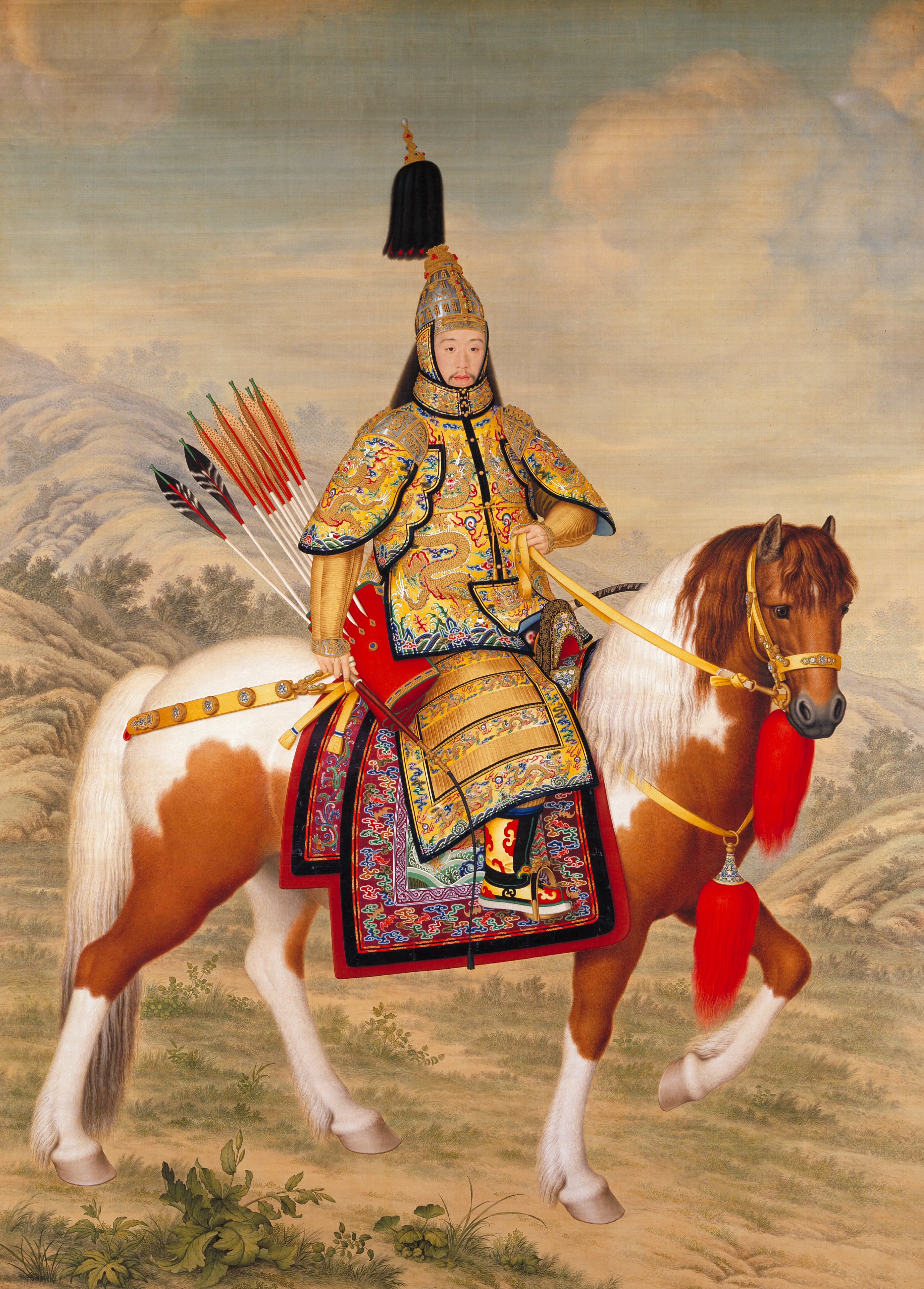
(The emperor when he returns for his wife. Source)


  • The daughter of a prince was very unlucky
  • She could've chosen anyone among a group of princes and counts but instead she chose a beggar because of his luck
    • The beggar had dragons in his ears and nostrils and dragons were a symbol of luck
  • Her father didn't agree to this and kicked her out of the kingdom and she had to live with the beggar outside of the castle
  • One day her husband, the beggar, left to seek out fortune and said he would come back for her
    • Why didn't he take her with him???
  • The princess waited 18 years for him to come back
  • The beggar returned to him as an emperor
    • However, she didn't recognize him anymore
  • He asks her if she wishes to marry someone else since her husband the beggar was gone for so long
    • She says no she will wait for her husband the beggar to come back until she dies
  • Seeing how faithful she was to him, the emperor revealed himself and took her back to his palace
  • They celebrated every day together as if it was a New Year
  • After 18 days together, she got sick and died while he lived on for many years


Bibliography

The Favorite of Fortune and the Child of Ill Luck by R. Wilhelm and translated by Frederick H. Martens